E-commerce Strategy
Why Product Discovery Matters on Shopify Stores
August 16, 2026 · 3 min read
A lot of Shopify conversion work focuses on the product page, and for good reason. That is where the buying decision usually happens. But before someone can decide to buy, they need to find the right product. If product discovery is weak, even strong product pages end up underused because visitors never reach the right one.
Product discovery is more than navigation
Navigation is part of product discovery, but it is not the whole thing. Discovery includes the homepage entry points, collection structure, filters, search, sorting, product cards, quizzes, bundles, and any guided path that helps a shopper narrow their options. It is the system that answers: "Where should I go next?"
Where discovery breaks down
- Categories match the brand's internal structure, not customer intent. A shopper does not care how the catalog is organized behind the scenes. They care about finding the thing that fits their need.
- Collections are too broad. A 100-product collection with weak filters asks the shopper to do too much work.
- Product cards do not show enough information. If size, color, material, offer, or compatibility matters, hiding all of that until the product page slows browsing down.
- Search is treated as a fallback. On larger catalogs, search is often one of the fastest routes to purchase. If it returns poor results or ignores common terms, serious buyers hit friction quickly.
Good discovery reduces decision fatigue
Shoppers do not always arrive knowing exactly what they want. A fragrance shopper might know they want something warm, not which bottle. A clothing shopper might know they need feeding-friendly nightwear, not the exact product name. A health product shopper might know the problem they want solved, not which size or variant is right.
Good discovery narrows the field in a way that feels natural. It gives people useful paths instead of dumping the whole catalog in front of them.
Useful discovery patterns
- Collection filters based on real buying criteria, not only vendor or price.
- Product cards that show important variant, offer, or availability details before click-through.
- Homepage sections that route visitors by need, use case, category, or problem.
- Quizzes or guided selectors when the product requires a personal fit or recommendation.
- Bundles and curated sets when shoppers commonly buy combinations, not single items.
Where case studies make this clear
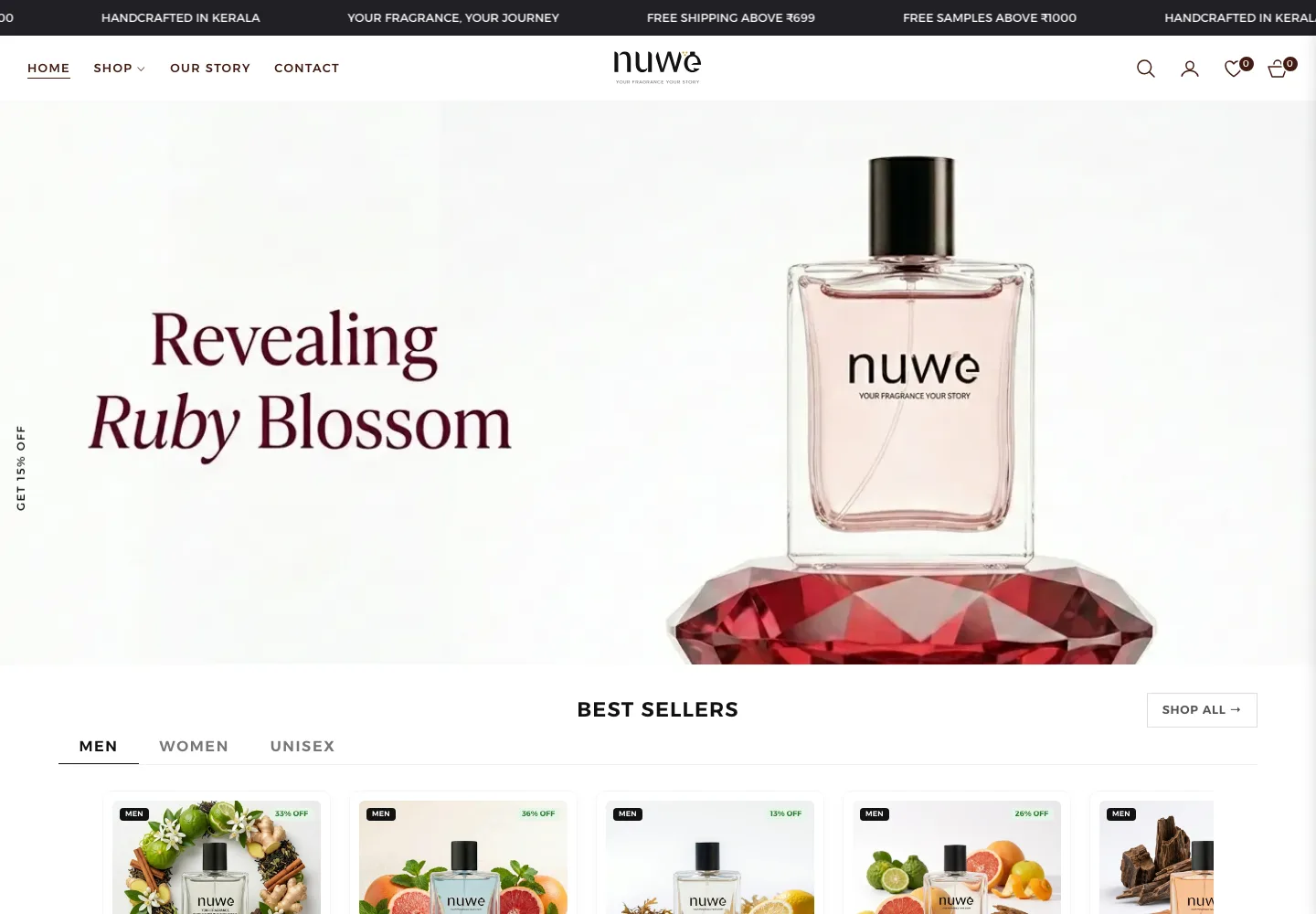
In the Nuwe Perfumes build, discovery mattered because the catalog had 60+ fragrances and multiple ways people might shop: scent family, occasion, product category, or gender-led collections. A flat product grid would have made the catalog feel harder than it needed to.
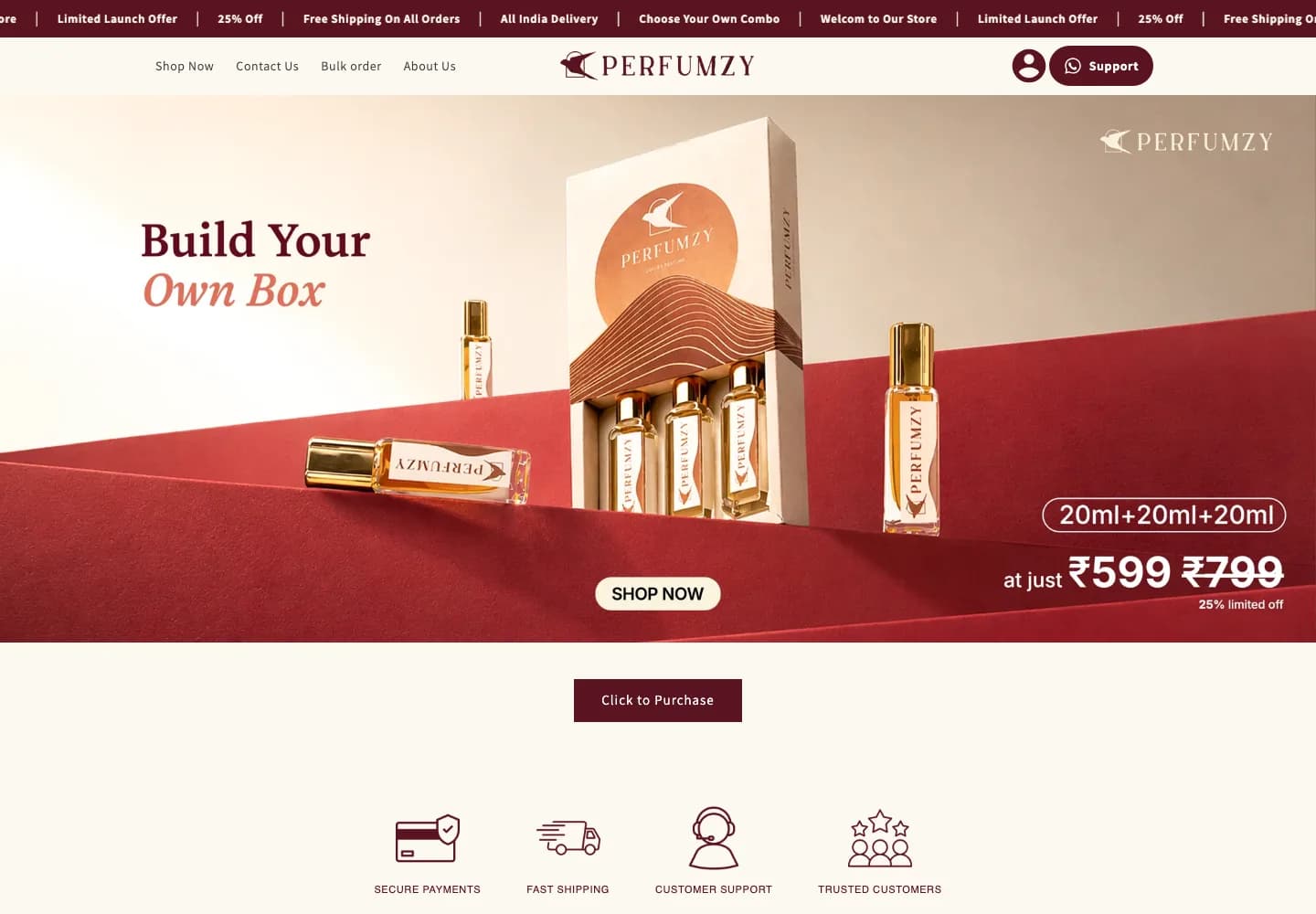
In the Perfumzy Build Your Own Box project, discovery was tied directly to the purchase mechanic. The shopper was not just browsing products; they were assembling a set. That needed a different flow than a standard collection page.
The quick audit question
Pick a common customer intent and try to complete it on your store. "I need a gift under this price." "I want a feeding-friendly nighty." "I want a warm evening fragrance." If the path is obvious, product discovery is doing its job. If you have to search, backtrack, or open five tabs just to compare basics, the store is making discovery too hard.
Want to see product discovery work in context?
Browse Shopify case studies where navigation, collection structure, bundles, and guided selection were part of the build.
View My Shopify Work →